
If Your Child Says Their Toe Hurts, This Could Be Why
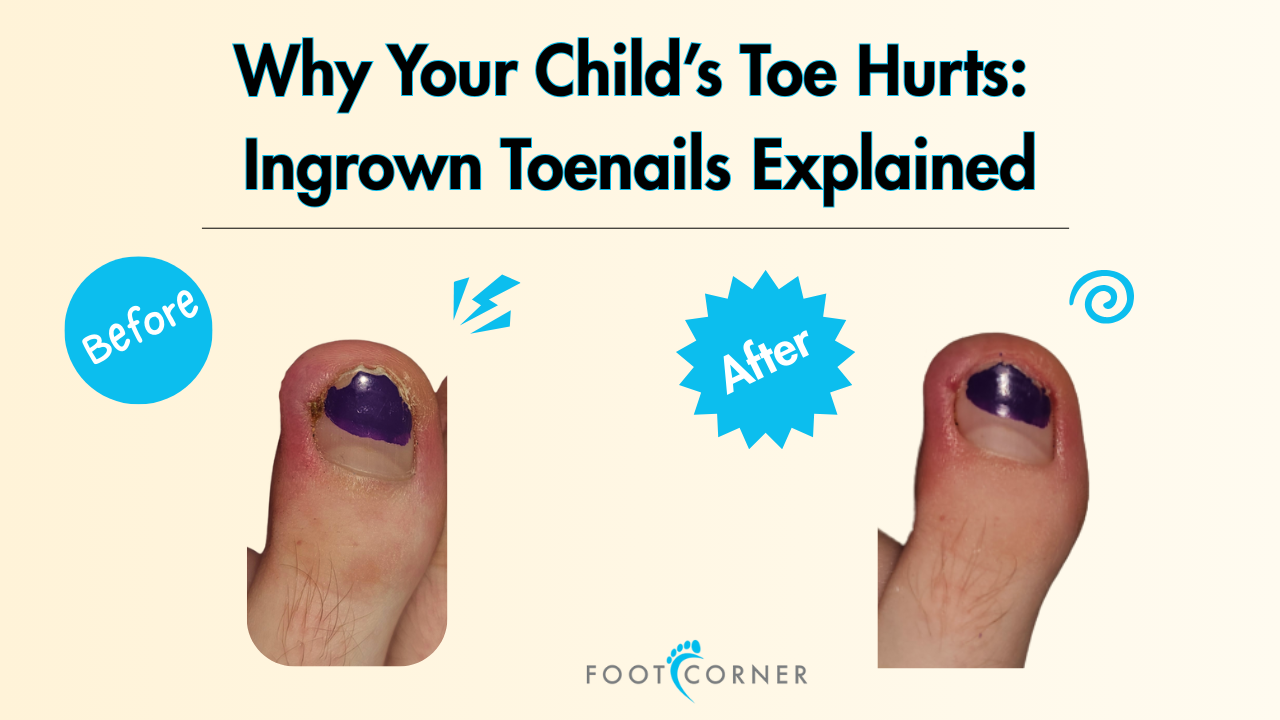
Jan 27, 2026If your child keeps mentioning that their toe hurts especially when putting shoes on, walking, or after school, it’s easy to assume it’s nothing serious. But one of the most common causes of toe pain in children is an ingrown toenail, where the nail begins to dig into the surrounding skin.
It can start small, but without the right care, it can quickly become painful and upsetting for a child.
What Is an Ingrown Toenail?
An ingrown toenail happens when the side or corner of the nail grows into the skin next to it instead of growing straight. This causes irritation, redness, and soreness and in some cases, infection.
Children are particularly prone to ingrown toenails because their nails are softer, their feet are growing, and their footwear doesn’t always keep up with sudden growth spurts.
Why Do Children Get Ingrown Toenails?
There are several common reasons we see ingrown toenails in children:
-
Nails cut too short or rounded
Parents often trim nails to keep them neat, but cutting down the corners can encourage the nail to grow into the skin. -
Tight school shoes or football boots
Narrow or tight footwear presses the nail into the skin, especially during long days at school or sport. -
Rapid growth
As feet grow quickly, nails can change shape and begin to curve. -
Sports and activity
Running, kicking, and repetitive pressure (especially football) increase the risk. -
Naturally curved nails
Some children are simply more prone due to their nail shape.
Signs Your Child May Have an Ingrown Toenail
Children don’t always explain pain clearly, so look out for:
-
Complaints of pain at the side of the toe
-
Redness or swelling around the nail
-
Reluctance to wear shoes
-
Limping or avoiding activity
-
Sensitivity when the toe is touched
As it progresses, you may notice discharge, bleeding, or overgrown skin around the nail.
Why Ingrown Toenails Can Be So Painful for Children
When a nail digs into the skin, the body reacts as if something sharp is stuck there. The area becomes inflamed and sore, and even light pressure from socks or bedsheets can be uncomfortable. For children, this can affect walking, school concentration and sport.
Should You Try to Treat It at Home?
It’s tempting to try to cut the nail further or “dig it out,” but this often makes things worse. Home treatment can push the nail deeper, break the skin, and increase the risk of infection especially in children.
If your child’s toe is painful, red, or swollen, professional assessment is always the safest option.
How Ingrown Toenails Are Treated
Treatment depends on how early the problem is caught:
-
Early-stage ingrown toenails may be managed with gentle nail care, pressure relief, and footwear advice.
-
Painful or infected ingrown toenails often require careful removal of the offending nail edge.
-
Repeated ingrown toenails may benefit from a permanent solution to prevent the painful section growing back.
At Foot Corner, we regularly treat children with ingrown toenails. Our approach is calm, gentle, and reassuring, helping relieve pain while explaining everything clearly to both child and parent.
When to Seek Help
If your child keeps saying their toe hurts, or you notice redness, swelling, or pain around a toenail, it’s best not to wait. Early treatment can prevent infection and get them back to walking, playing, and wearing shoes comfortably again.
If you’re unsure, our team at Foot Corner is always happy to assess and advise because small feet deserve big care.
To contact us call us on 01784 250 781 or email us on [email protected]
