
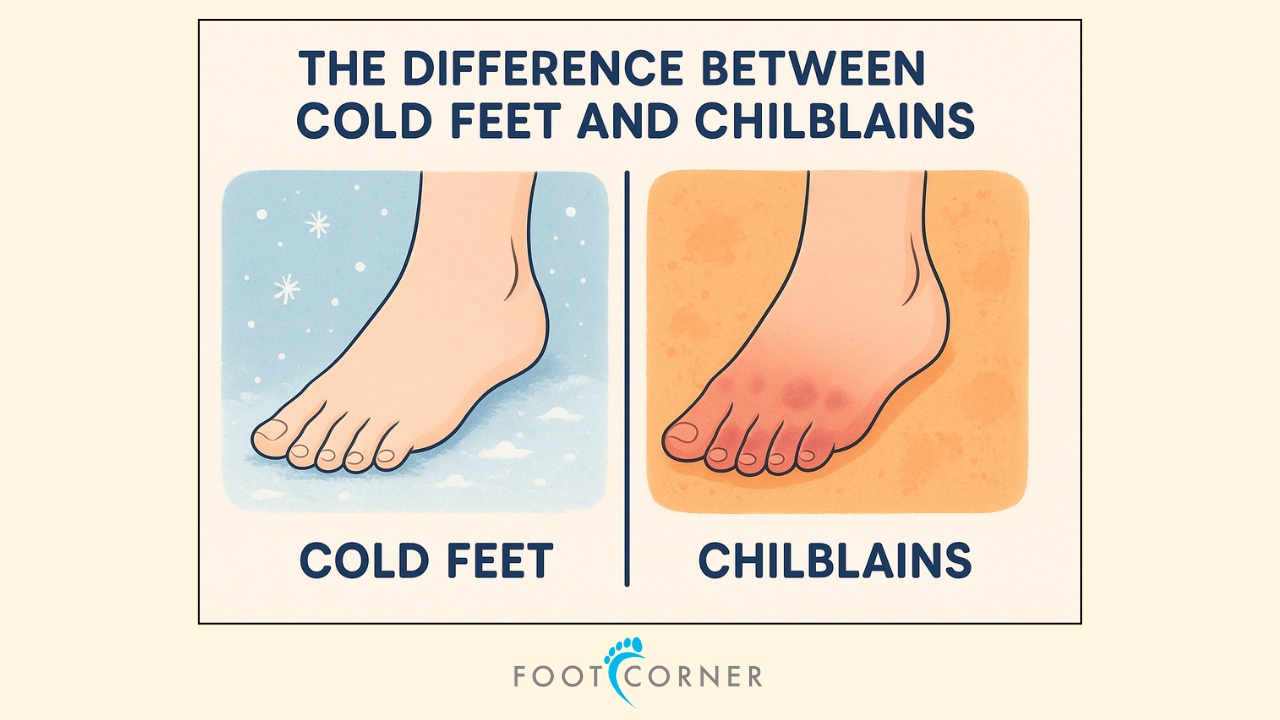
Cold Feet vs Chilblains - What’s the Difference?
Nov 30, 2025During the colder months, we see a big rise in patients worried about cold, painful or discoloured toes. Cold feet and chilblains often get mixed up, but they’re actually very different and knowing which one you have helps you treat it properly.
Cold Feet
Cold feet simply happen when:
-
The temperature drops
-
Circulation slows
-
Feet aren’t kept warm enough
What you’ll notice:
-
Feet feel cold to touch
-
Skin looks pale
-
Discomfort improves once warmed
-
No lasting skin damage
Cold feet are usually temporary and improve with warm socks, steady movement and better insulation.
Chilblains
At Foot Corner, we see chilblains often in winter. They’re a reaction to cold, not just cold itself.
They occur when cold skin is re-warmed too quickly.
What you’ll notice:
-
Red, purple or darker patches
-
Itching or burning
-
Swelling or tenderness
-
Skin that may crack or blister
-
Symptoms lasting days–weeks
Chilblains are painful but not dangerous however, they do need gentle care.
How to Tell the Difference
| Symptom | Cold Feet | Chilblains |
|---|---|---|
| Skin colour | Pale | Red/purple |
| Pain/itching | Mild | Itchy/burning/painful |
| Duration | Short-term | Days–weeks |
| Trigger | Cold exposure | Rapid warming after cold |
| Skin damage | None | Possible cracks/blisters |
If your toes are very sore, cracked, or not improving, we can assess the skin, protect the area, and advise on the best treatment and prevention.
📍 Foot Corner, 15 Church Parade, Ashford, TW15 2TX
📞 01784 250 781
🌐 www.footcorner.co.uk
