
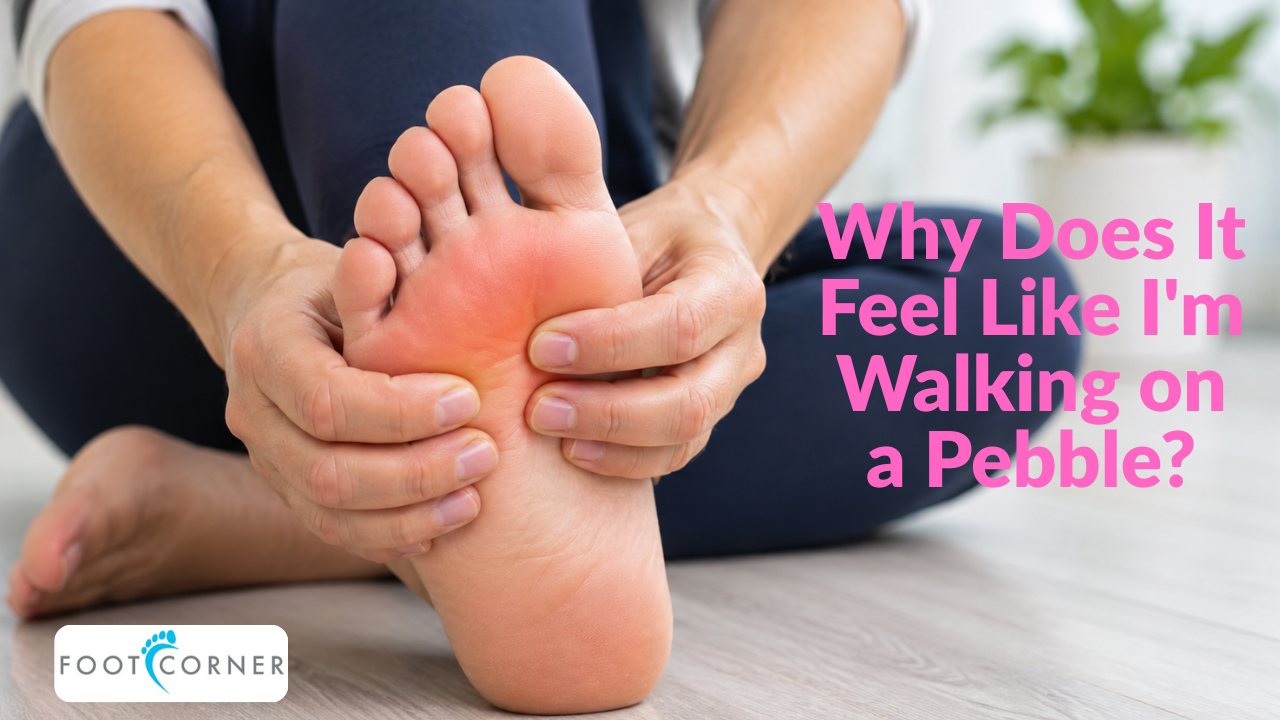
Why Does It Feel Like I'm Walking on a Pebble?
Nov 10, 2026Have you ever been walking and felt as though there's a small stone stuck inside your shoe, but when you check, there's nothing there?
It's a surprisingly common complaint, and something we hear from patients at Foot Corner in Ashford, Surrey.
Some people describe it as walking on a pebble, while others say it feels like a small lump, a bruise or even a folded-up sock underneath their foot.
This uncomfortable sensation can make everyday activities, such as walking, shopping or standing for long periods, quite painful.
But what causes it, and what can be done about it?
There are several possible reasons why you might experience this sensation. The important thing to understand is that the pain doesn't always come from something you can see on the surface of your foot.
Here are some of the common causes.
1. Morton's Neuroma - An Irritated Nerve
One possible cause is a condition called Morton's neuroma.
This occurs when a nerve between the bones of the forefoot becomes irritated, and the tissue around it thickens.
It most commonly affects the area between the third and fourth toes.
Patients often describe:
-
Feeling as though they're standing on a small stone.
-
Burning or shooting pain in the ball of the foot.
-
Tingling or numbness in the toes.
-
Pain that becomes worse when wearing tight shoes.
-
Relief when taking their shoes off.
Morton's neuroma can develop gradually, and symptoms may come and go initially.
Narrow shoes, high heels and repeated pressure on the forefoot can all contribute to the problem.
2. Corn - Small but Painful
Sometimes the cause is much simpler.
A corn is a small area of concentrated hard skin that develops because of repeated pressure or friction.
Although corns can look quite small, they can cause a surprising amount of discomfort.
This is because the hard skin becomes concentrated in one area, creating pressure on the sensitive tissue underneath.
Some patients describe the pain as having a tiny stone embedded in their foot.
At Foot Corner, we regularly treat patients with painful corns, carefully removing the hard skin and looking at why the pressure is developing in the first place.
3. Metatarsalgia - Too Much Pressure on the Ball of the Foot
Metatarsalgia is the term used to describe pain around the ball of the foot.
It can develop when excessive pressure is placed on the metatarsal heads, which are the bones just behind your toes.
You may notice:
-
Aching or burning beneath the ball of your foot.
-
Pain that increases when walking or standing.
-
Tenderness when pressing underneath the forefoot.
-
The sensation of walking on something uncomfortable.
Several factors can contribute, including footwear, foot shape, altered walking patterns and increased activity.
Sometimes the problem isn't just where the pain is felt, but how pressure is being distributed across the foot when you walk.
4. Verrucae - A Hidden Cause of Discomfort
A verruca is another possible cause, particularly when it develops on a weight-bearing part of the foot.
Verrucae can sometimes be covered by hard skin, making them difficult to identify.
They may cause discomfort when walking or standing, and some people mistake them for corns.
However, corns and verrucae are different conditions and require different approaches to treatment.
Our podiatrist can examine the area and help identify the cause.
Why Does It Hurt More When I'm Wearing Shoes?
Footwear plays an important role in how pressure is distributed across your feet.
Shoes that are too narrow can squeeze the forefoot, increasing pressure on the nerves and joints.
Similarly, shoes with thin soles or limited cushioning can make an already sensitive area more uncomfortable.
This is why some people notice their symptoms improve when they remove their shoes or change into more comfortable footwear.
However, if the pain keeps returning, it's worth finding out what is causing it rather than simply changing shoes repeatedly.
What Can I Do to Help Relieve the Pain?
There are a few simple things you can try at home:
-
Check your footwear: Choose shoes with enough room around the toes and good cushioning underneath the forefoot.
-
Reduce pressure: Avoid activities that repeatedly aggravate the painful area, where possible.
-
Avoid high heels: These transfer more body weight towards the front of the foot.
-
Consider suitable insoles: Cushioning or pressure-relieving insoles may help, depending on the cause.
-
Don't cut away hard skin yourself: Trying to remove a suspected corn with sharp instruments can damage the skin.
These changes may help with discomfort, but the right approach depends on what is actually causing the pain.
How Can a Podiatrist Help?
At Foot Corner in Ashford, Surrey, we start by examining your foot and listening to how you describe the pain.
We may ask when the discomfort started, whether certain shoes make it worse, and exactly where you feel the sensation.
We also look at the skin, joints, nerves and areas of pressure underneath your foot.
Depending on our findings, treatment may include:
Corn and hard skin removal
If a painful corn is responsible, careful removal of the concentrated hard skin can help relieve discomfort.
Footwear advice
Sometimes small changes to your shoes can make a noticeable difference.
Pressure-relieving padding or insoles
These may help redistribute pressure away from a painful area.
Biomechanical assessment
If we suspect that the way your foot functions is contributing to the problem, we may recommend a more detailed assessment of your walking pattern and foot mechanics.
Custom-made orthotics
Where appropriate, these can be designed to improve pressure distribution and support the foot.
If we suspect a condition that requires further investigation, such as Morton's neuroma, we can discuss whether additional assessment or a referral is needed.
When Should I Get My Foot Checked?
If the sensation has been bothering you for a while, keeps returning or is starting to affect how you walk, it's worth getting it assessed.
You should also seek medical advice if you experience persistent numbness, tingling or worsening pain.
If you develop sudden severe pain, significant swelling, or cannot put weight on your foot, seek urgent medical advice. People with diabetes who develop new foot pain or skin changes should seek prompt assessment.
Don't Ignore That Pebble Feeling
It's easy to dismiss a little discomfort under your foot, particularly when you can't see anything unusual.
But the feeling of walking on a pebble can have several different causes, and each one may need a different treatment approach.
At Foot Corner in Ashford, Surrey, our podiatrists can help identify what's causing your discomfort and discuss suitable treatment options.
We welcome patients from Ashford, Staines, Sunbury, Stanwell and the surrounding areas.
If you've been experiencing pain in the ball of your foot, we're here to help.
To book an appointment, click Here or call us on 01784 250 781.
