
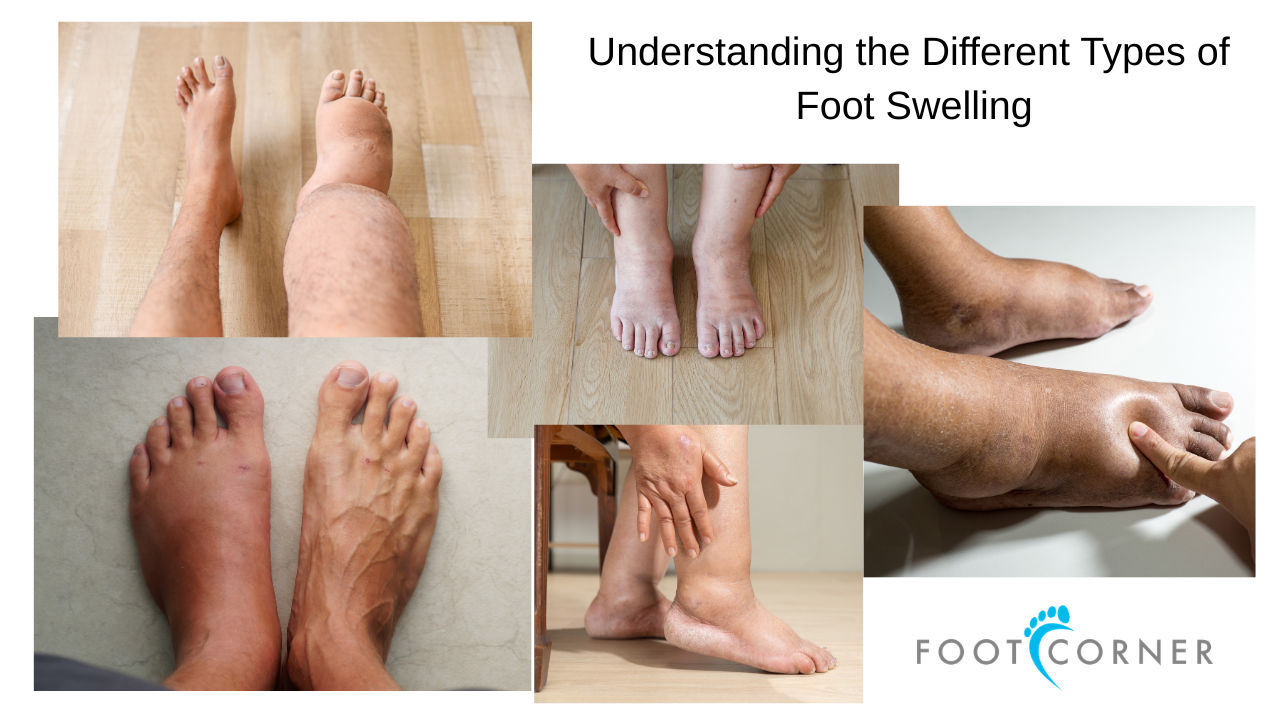
Why Are My Feet Swollen? Understanding the Different Types of Foot Swelling
May 01, 2026Swollen feet are something we see regularly in clinic, especially in people who spend long hours standing, have circulation issues, are recovering from injury, or simply notice that one shoe suddenly feels tighter than the other.
But foot swelling is not just “swelling.”
The type of swelling, where it appears, whether it affects one foot or both, and what the skin feels like can tell us a great deal about what may be going on underneath.
In medical terms, swelling caused by fluid build-up is called oedema. This happens when excess fluid becomes trapped in the tissues of the feet, ankles, or legs. Common causes include circulation problems, vein issues, lymphatic drainage problems, injury, inflammation, medication, or wider medical conditions.
Let’s look at the main differences in foot swelling.
1. Soft Puffy Swelling in Both Feet and Ankles
Often Linked to Fluid Retention or Poor Circulation
This is the most common type people notice.
Both feet and ankles may look generally enlarged, feel heavy, and shoes may feel tight by the end of the day. If you press your finger into the swollen area, it may leave a temporary dent this is known as pitting oedema.
This kind of swelling often happens because fluid is not moving back up the body efficiently.
Common reasons include:
- Standing for long periods
- Sitting for long periods
- Hot weather
- Being overweight
- Poor vein function
- Certain medications
- General fluid retention
Vein-related swelling is especially common because the veins in the legs have to work against gravity to push blood back upward. When the valves weaken, fluid begins to pool in the feet and ankles. Chronic venous insufficiency is one of the most common long-term causes of this type of lower limb swelling.
2. Firm, Tight, Long-Term Swelling
Often Associated with Lymphatic Swelling (Lymphoedema)
This swelling tends to feel different.
Instead of soft and squishy, the foot can feel:
- tighter
- firmer
- heavier
- harder to press into
The skin may feel stretched and over time can become thickened.
This happens when the lymphatic system, the body’s drainage network is not clearing excess fluid properly.
Patients often say:
“My foot just feels full all the time.”
or
“It doesn’t really go down overnight.”
This type of swelling can affect one foot or both and usually needs proper assessment because it does not tend to settle simply by resting.
Persistent swelling that does not reduce well with elevation can indicate chronic oedema or early lymphatic failure.
3. Swelling Around One Area of the Foot
Often Due to Injury or Inflammation
Sometimes swelling is not generalised across the whole foot.
Instead, it may be:
- around the ankle
- over the top of the foot
- near the big toe joint
- around the heel
- around a tendon
This usually suggests a more local issue such as:
- sprain
- arthritis flare
- tendon irritation
- trauma
- joint inflammation
- infection
This swelling is often:
- warmer
- more tender
- painful to touch
- linked with difficulty walking
Localised swelling usually tells us the body is reacting to tissue stress or inflammation in one specific area rather than a whole circulation issue.
4. Swelling in One Foot More Than the Other
A Sign That Needs Proper Checking
When one foot is noticeably more swollen than the other, we pay close attention.
Uneven swelling can sometimes indicate:
- local injury
- vein blockage
- chronic venous disease
- lymphatic dysfunction
- infection
Sudden swelling in one foot or one leg should never be ignored, especially if there is pain, redness, heat, or calf discomfort.
One-sided swelling requires proper assessment to rule out vascular or inflammatory causes.
5. Swelling with Skin Changes
Usually Suggests a Longer-Term Circulation Problem
Sometimes the swelling comes with:
- shiny skin
- dry flaky skin
- redness
- brown staining
- itching
- tightness
This often means the swelling has been there for some time and the skin is now under pressure.
Long-term venous swelling can start affecting skin quality and healing ability, which is why early treatment matters.
Without management, swollen feet can become:
- uncomfortable
- difficult to fit into footwear
- prone to skin cracking
- at greater risk of infection
Why Identifying the Type of Swelling Matters
Many people simply assume swollen feet are “just old age” or “just fluid.”
But swelling is really a symptom not a diagnosis.
The appearance of the swelling gives us clues about:
- circulation
- joint health
- inflammation
- pressure loading
- lymphatic drainage
- vascular function
Treating the cause rather than just the swelling itself is the key.
How Foot Corner Can Help
At Foot Corner, we assess swollen feet regularly.
During your appointment we look at:
- where the swelling is
- whether it pits
- skin quality and colour
- circulation
- pressure areas
- pain patterns
- footwear fit
- whether referral is needed
In many cases, simple podiatry support, offloading advice, circulation guidance, footwear changes and onward recommendations can make a big difference in comfort and mobility.
Swollen feet should never simply be ignored especially if the swelling is persistent, worsening, or affecting walking.
Concerned About Swollen Feet?
If your feet are becoming puffy, tight, uncomfortable, or one foot is changing shape more than the other, we can help assess what may be contributing.
Foot Corner Podiatry Clinic, Ashford, Surrey
📞 01784 250 781
🌐 www.footcorner.co.uk
Book online appointments HERE
